
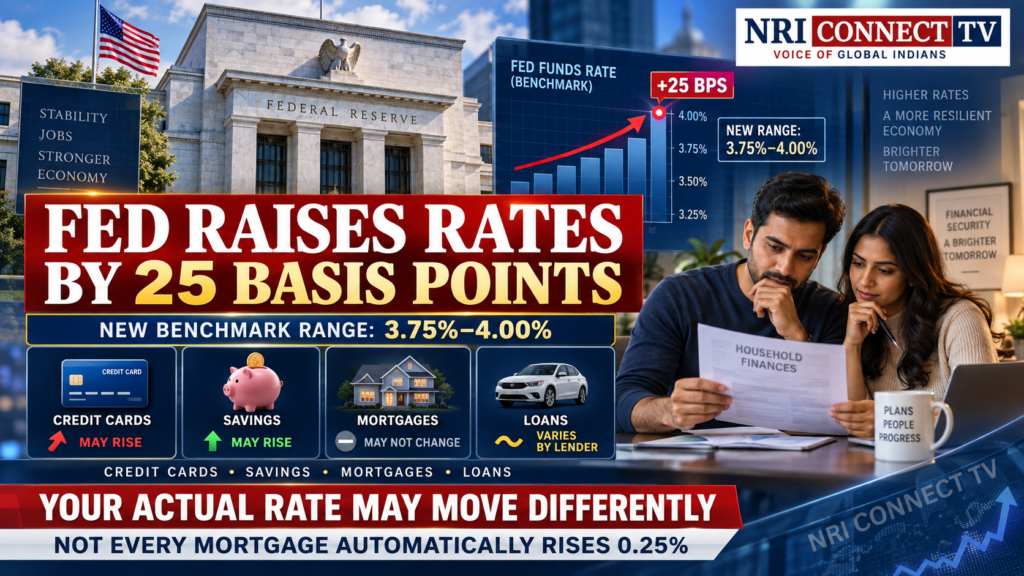
The Federal Reserve raised its benchmark interest-rate range by a quarter percentage point on September 16, taking the federal-funds target to 3.75%–4.00%. The unanimous decision is the clearest finance development in this package for U.S. households, borrowers, and businesses managing money across the United States.
Why did the Fed raise rates?
The FOMC said economic activity continued to expand at a solid pace and domestic spending remained resilient, while inflation was still elevated. The committee said the increase would support a more timely return toward its 2% inflation objective. The Fed also increased the rate paid on reserve balances to 3.90% and the primary credit rate to 4.0%, effective September 17.
What does it mean for borrowers?
The federal-funds rate is not the rate consumers directly pay on a mortgage or credit card. But it influences financing conditions throughout the economy. Credit-card APRs and other variable borrowing costs can respond relatively quickly to higher policy rates. Auto, personal and business loans depend on additional credit and market factors.
Mortgage rates are influenced heavily by longer-term bond yields and inflation expectations, so a 25-basis-point Fed increase does not mean every mortgage automatically becomes 0.25 percentage point more expensive.
What about savers?
Higher policy rates can support yields on savings accounts, CDs and money-market products, but banks determine their own rates. Consumers should compare actual annual percentage yields rather than assuming their existing bank will automatically pass through the Fed increase.
The Fed’s new projections
FOMC participants median projections put 2026 real GDP growth at 2.3%, unemployment at 4.1%, PCE inflation at 3.7%, and core PCE inflation at 3.4%. The median participant’s projected appropriate federal-funds rate was 4.1% at year-end 2026. These are individual policymakers projections not promises about future Fed decisions.
Interestingly, the median projected 2026 unemployment rate improved from June’s 4.3% projection to 4.1%, while the inflation projection edged upward.
https://www.federalreserve.gov/newsevents/pressreleases/monetary20260916a.htm












Follow NRI Connect where you already are.