
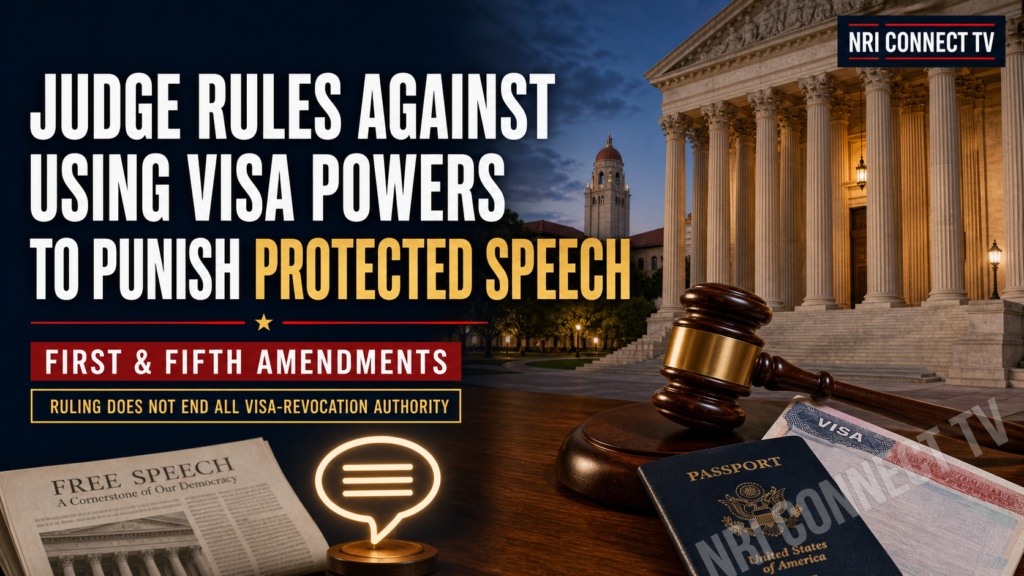
A federal judge in California ruled August 28 that portions of federal immigration law used to revoke visas and pursue deportation are unconstitutional when applied to protected speech. The decision is highly relevant to international students and other lawfully present noncitizens but it is narrower than saying the government has lost all authority to revoke visas or initiate removal proceedings.
What exactly did the judge decide?
The case addressed provisions associated with deportability on foreign-policy grounds and the Secretary of State’s visa-revocation authority.
The court held that the challenged portion of the deportation provision violated the First Amendment with respect to enforcement based on protected speech and was unconstitutionally vague under the Fifth Amendment in that context. It reached equivalent conclusions concerning the challenged portion of the visa-revocation provision.
That wording matters. The ruling did not declare every visa revocation unconstitutional, nor does it prevent enforcement based on unrelated immigration violations.
The court awarded declaratory relief. It did not grant plaintiffs’ requested permanent injunctive relief under the deportation provision and said an injunction was not appropriate at this stage concerning the revocation provision after declaring the challenged application unconstitutional. The clerk was directed to enter judgment and close the district-court case.
Indian nationals represent a significant international-student population in the United States, making the practical distinction important. A student maintaining F-1 status does not surrender constitutional protections simply because they are not a U.S. citizen. At the same time, this ruling should not be interpreted as permission to disregard visa-status requirements or as immunity from enforcement unrelated to protected expression.
What should visa holders do?
Students should continue maintaining their underlying status, keeping immigration records current and following normal F-1/J-1 or other visa requirements. If a visa is actually revoked or an immigration proceeding is initiated in connection with speech, that is a case-specific legal matter and qualified counsel should review the notice and underlying authority.
What happens next?
The judgment can be appealed. Until appellate proceedings clarify the legal landscape, readers should distinguish the district court’s constitutional holding from a nationwide guarantee against every possible visa-revocation action.
Federal court memorandum of decision












Follow NRI Connect where you already are.