
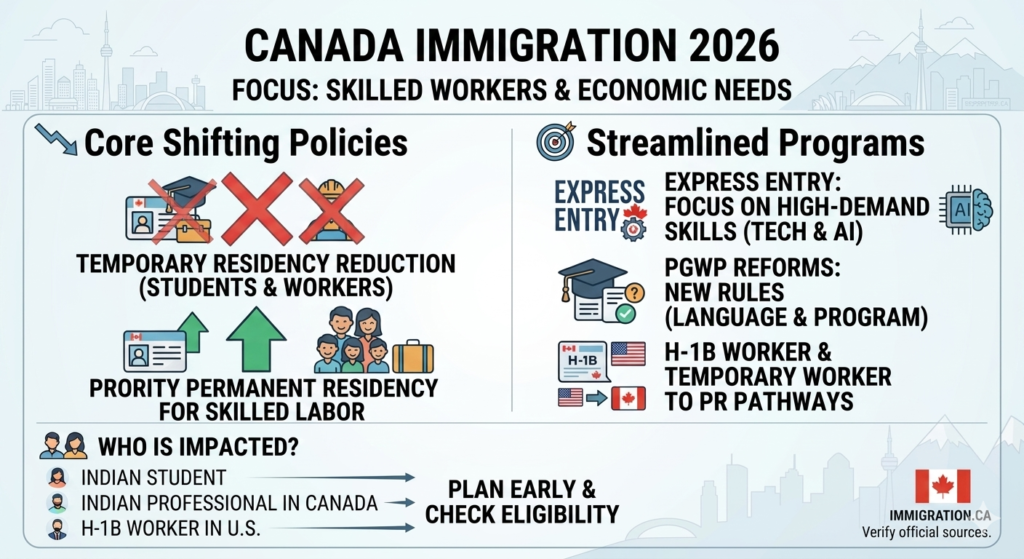
Canada is making several changes to its immigration system in 2026, with a stronger focus on skilled workers and tighter controls on temporary immigration.
What’s changing?
-
Temporary immigration: Canada is reducing the number of new temporary residents, including some international students and temporary workers.
-
Permanent residence: Canada continues to prioritize permanent immigration, particularly workers who can meet the country’s economic and labor needs.
-
Express Entry: Express Entry remains one of the main routes to permanent residence for skilled workers.
-
High-demand skills: Technology, artificial intelligence and other specialized skills could receive more attention in future immigration selections.
-
H-1B workers: Canada is considering a possible Express Entry pathway for some U.S.-based H-1B workers. This is only a proposal and is not yet an active program.
-
Temporary workers in Canada: Canada plans to transition up to 33,000 temporary workers to permanent residence during 2026–2027, subject to eligibility and government programs.
-
International students: Study-permit rules and admission targets are becoming more controlled, making it important for students to carefully choose their program and institution.
-
Post-graduation work permits: Some graduates must meet additional language and program-related requirements to qualify for a PGWP.
Who should pay attention?
Indian students:
Check whether your program qualifies for a post-graduation work permit and research your potential PR pathway before choosing a college or university.
Indian professionals in Canada:
Review your Express Entry profile, language score, Canadian work experience and possible provincial nomination options.
Indian H-1B workers in the U.S.:
Keep an eye on Canada’s proposed H-1B-related pathway, but do not make plans based on it until official rules are announced.
Indians planning to move to Canada:
Focus on confirmed immigration programs and make sure you understand the eligibility requirements before spending money on applications, education or relocation.
Canada is not ending immigration. Instead, the country is moving toward a more targeted system that gives greater attention to skilled workers and economic priorities while controlling temporary migration.
For Indian applicants, the message is simple: check the latest official rules, choose the right pathway and plan for permanent residence early.
Immigration rules can change. Applicants should verify eligibility and deadlines through official Canadian government sources before applying.
Reference:
Canada 2026–2028 Immigration Levels Plan
#CanadaImmigration2026 #ExpressEntry #SkilledWorkers #CanadaPR #StudyInCanada #InternationalStudents #PGWP #H1BToCanada #ImmigrationUpdate












Follow NRI Connect where you already are.